

From Fragmented to Flowing: A Floating Staircase Transformation
When our clients first took ownership of this farmhouse, the interior lacked clarity, connection, and purpose. What began as a request to replace a staircase quickly evolved into something far more significant – an opportunity to rethink how the entire home functioned. Showcasing the potential for a staircase to become the defining element of a space, here we explain how this was achieved:
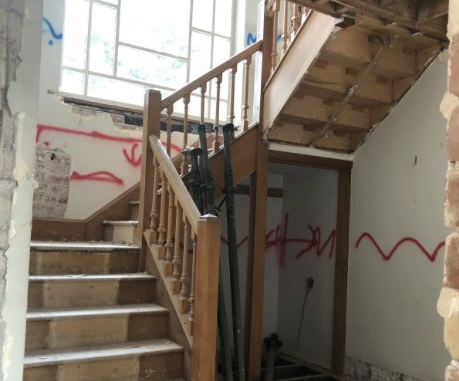
The Starting Point – A Fragmented Interior
The existing layout felt disjointed. Rooms were poorly connected, natural light struggled to travel through the space, and the architectural character had been diluted over time. While the staircase itself was outdated, it was not the root problem; more a symptom of a deeper issue within the plan. The clients’ ambition was to restore harmony, elegance, and a sense of flow throughout the home. This required more than aesthetic improvement; it called for a fundamental rethinking of how the space worked both practically and emotionally.
The Design Vision
Working closely with Studio4 Architecture and Anna Crecraft Interiors, Bisca was involved from concept stage, allowing the team to approach the property as a blank canvas. Rather than designing within constraints, the staircase became the focus for shaping the layout, instead of being confined by it. This collaborative process ensured architectural intent; interior styling; and staircase design; were fully aligned from the outset.
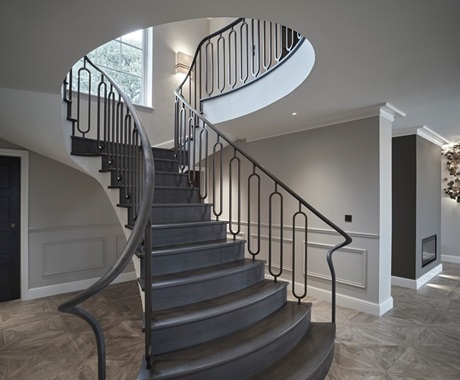
The Staircase as the Organising Principle
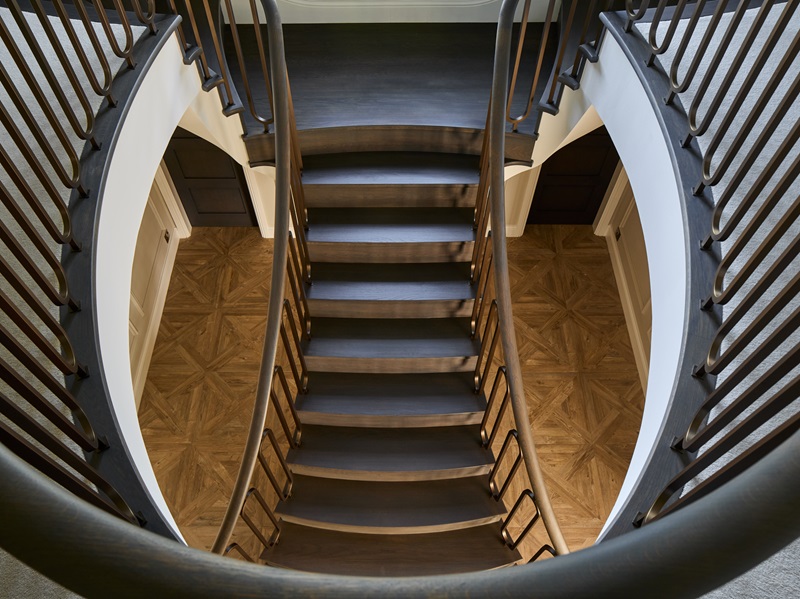
At the heart of the transformation is a striking floating staircase. Rising from the entrance hall, it forms a sculptural T-shape, branching at a reconfigured galleried landing above. Its placement defines the home. It establishes a clear sense of arrival, improves circulation, and creates visual connections between spaces that were once isolated. More than a functional element, the floating staircase design acts as the architectural anchor – guiding how the entire interior is experienced.
The Transformation: From Fragmented to Flowing
The result is a complete shift in how the home feels. Where once there was disconnection, there is now flow. Light moves freely between levels, spaces feel intuitively linked, and the staircase draws you through the home with ease. As architect Christopher Williams reflects, early spatial reconfiguration allowed the staircase to become “much more than a functional transition… a sculptural focal point,” perfectly realising the design vision.
Why Involve a Staircase Specialist
Achieving this level of clarity requires more than design intent – it demands precision at every stage. Bisca’s full-service approach begins with detailed surveys and concept design, followed by material selection and technical development. Every element is then handcrafted to exact specifications, ensuring the staircase design responds perfectly to both the building and the interior scheme.
Details were meticulously resolved—from the comfort of the staircase geometry to the integration of a carpet runner within each landing. Brass uprights were carefully aged to complement the wider palette, while structural coordination and a full 3D survey ensured flawless installation.
Crucially, the same experts who crafted each component carried out the final installation, maintaining continuity from concept to completion.
Contact one of our design team for a free design consultation on the details below:
Tel: 01439 771702 | Email: staircase@bisca.co.uk
Alternatively, please click below to get your project started: