

Staircase Budget Planning: Maximising The Value & Potential of Your Investment
Staircase budget decisions often shape far more than the staircase itself. When considered early as part of thoughtful staircase planning, a bespoke design can enhance a building’s architecture, improve its flow and deliver long-term value – often more effectively than if left to be a late-stage structural element.
At Bisca, we regularly collaborate with architects, quantity surveyors and contractors to help ensure staircase planning aligns with both design ambition and project budgets. When these disciplines work together early, the results are often more cohesive, efficient and rewarding.
Staircase Budget Planning: Why Early Design Adds Value
When establishing a staircase budget, it can be tempting to allocate less to this part of your project, despite it interacting with multiple elements of the building – from the concealed framework and floor finishes to lighting, circulation and spatial flow.
This is where early staircase planning becomes valuable and a specialist can offer dedicated expertise regarding:
Structural interfaces and fixing methods
Material transitions and detailing
Ergonomics, proportions and comfort
Integration with surrounding architecture
Coordination with contractors and consultants
When these considerations are resolved early, you greatly reduce the possibility of compromise or revision later in the process.
Staircase Budget Considerations: A Real-World Example
In one renovation project, we met clients who had initially planned to install a balustrade onto a concrete staircase which had been constructed earlier in the build. When Bisca later surveyed the staircase, a number of challenges became apparent:
The staircase and balustrade had been designed independently
Allowances for finishes and interfaces had not been considered
Structural fixing points were limited
The stair position restricted intended balustrade placement
Design complexity made retrofitting difficult
These challenges did not reflect poor practice – rather, they highlighted how complex staircase integration cannot be achieved without expert staircase planning. The clients were ultimately faced with either:
1. Rebuilding the staircase to achieve their original vision
2. Adjusting the design to suit existing constraints
Neither option was ideal, but the experience reinforced why early collaboration between architect, contractor and staircase specialist is preferable.
Collaborative Staircase Planning Creates Better Outcomes
A staircase specialist does not replace the role of architects, contractors or quantity surveyors — instead, they complement them.
When working together:
Architects shape the spatial vision
Contractors deliver structural construction
Quantity surveyors guide overall budget management
Staircase specialists resolve design integration and detailing
This collaborative approach often helps ensure staircase budget decisions reflect the full scope of design, fabrication and installation — rather than purely construction costs.
While many architects may design several staircases each year, a staircase specialist focuses exclusively on these complex architectural elements, bringing additional depth to staircase planning and execution.
The Value of Bespoke Staircase Design
Every bespoke staircase involves significant design development, including:
Structural engineering considerations
Material selection and transitions
Interface detailing with floors and walls
Ergonomic and building regulation requirements
Aesthetic integration with the wider architecture
These elements influence both the staircase budget and the success of the finished result. When considered early, they help ensure the staircase enhances the project rather than becoming constrained by it.
Often, around 60% of the design relates directly to the staircase, while 40% relates to how it integrates with the surrounding architecture — reinforcing why staircase planning is most effective when approached holistically.
Staircase Budget Planning: Practical Considerations
When planning your staircase budget, here is a step by step guide as to how to source the most effective solution:
1. Engage a staircase specialist early to explore design possibilities
2. Treat staircase and balustrade as a unified architectural element
3. Consider how the staircase integrates with layout and finishes
4. Ensure quotations reflect comparable scope and specification
5. Allow time for design development and coordination
6. Explore bespoke options before finalising layouts
These steps help ensure your staircase budget supports both design ambition and practical delivery.
Why Consider a Staircase Specialist?
A bespoke staircase is often one of the most visually prominent and technically complex elements within a home. By engaging a staircase specialist during early planning, the staircase can:
Enhance spatial flow and circulation
Introduce architectural focus and identity
Improve light and movement within the home
Integrate seamlessly with materials and finishes
Deliver long-term value through thoughtful design
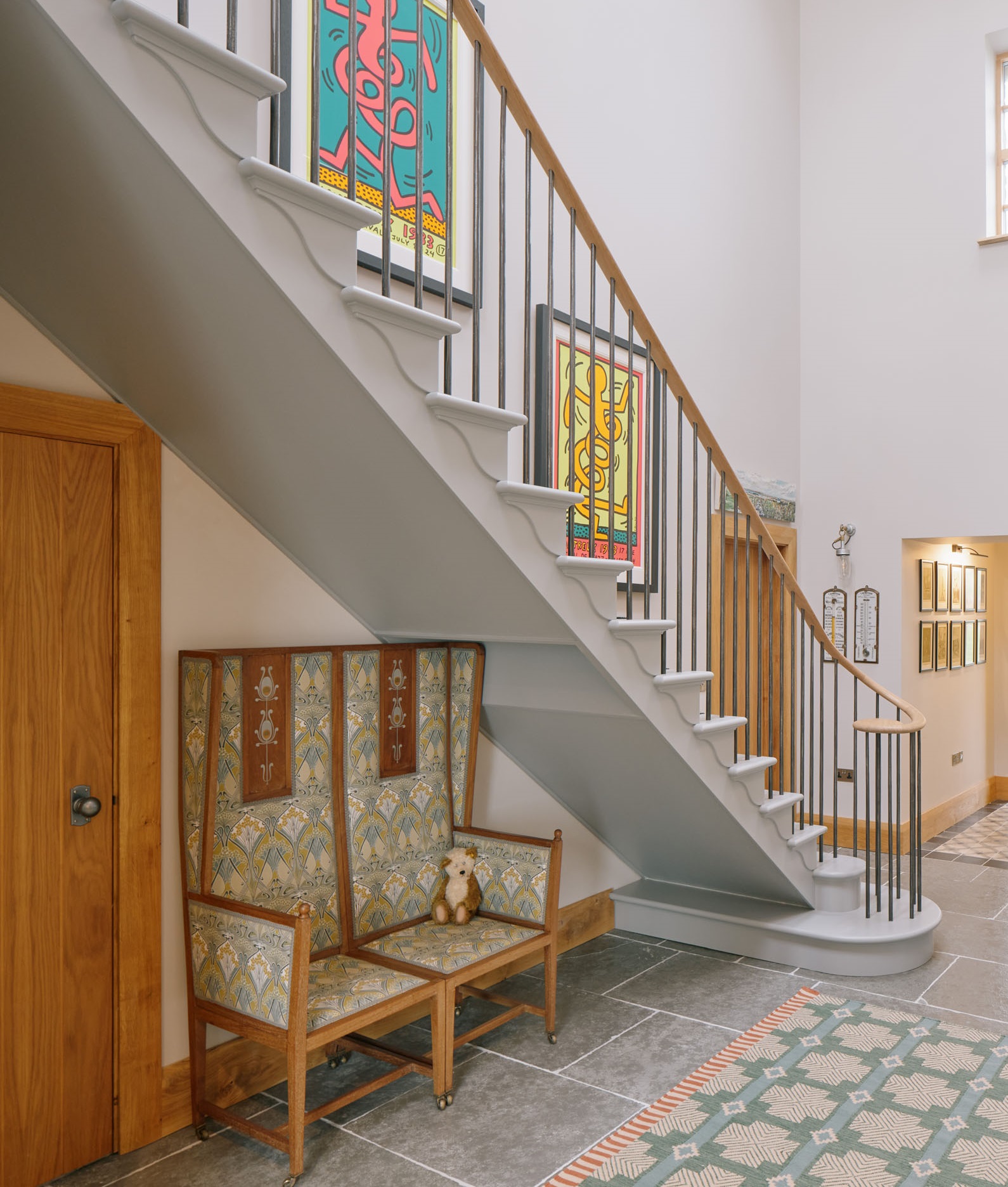
When staircase planning is approached collaboratively, the result is not simply a staircase — but an architectural feature that contributes meaningfully to the overall design.
Considering your staircase budget early in the design process can unlock new possibilities. Whether working alongside architects, contractors or project teams, a staircase specialist can help ensure your bespoke staircase achieves both design ambition and practical value.