
Floating Staircase Design, North Yorkshire
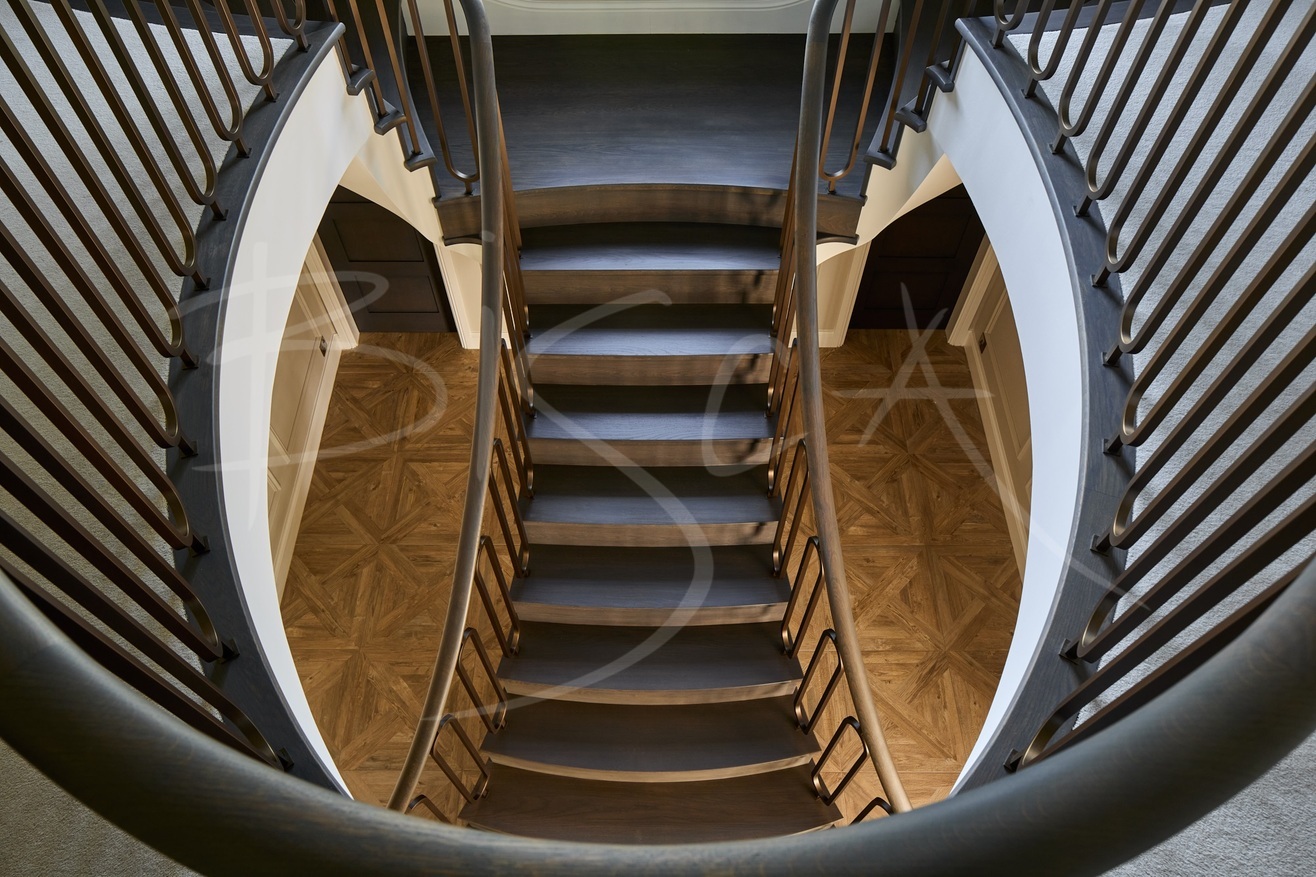
This unique T-shaped floating staircase design, rises from a stunning farmhouse entrance hall and divides at the curved galleried landing above. An aged brass balustrade and smoked oak treads offer tonal harmony with interior fixtures, transforming a once fragmented property, into a home of enduring beauty.
Project ID: 8146
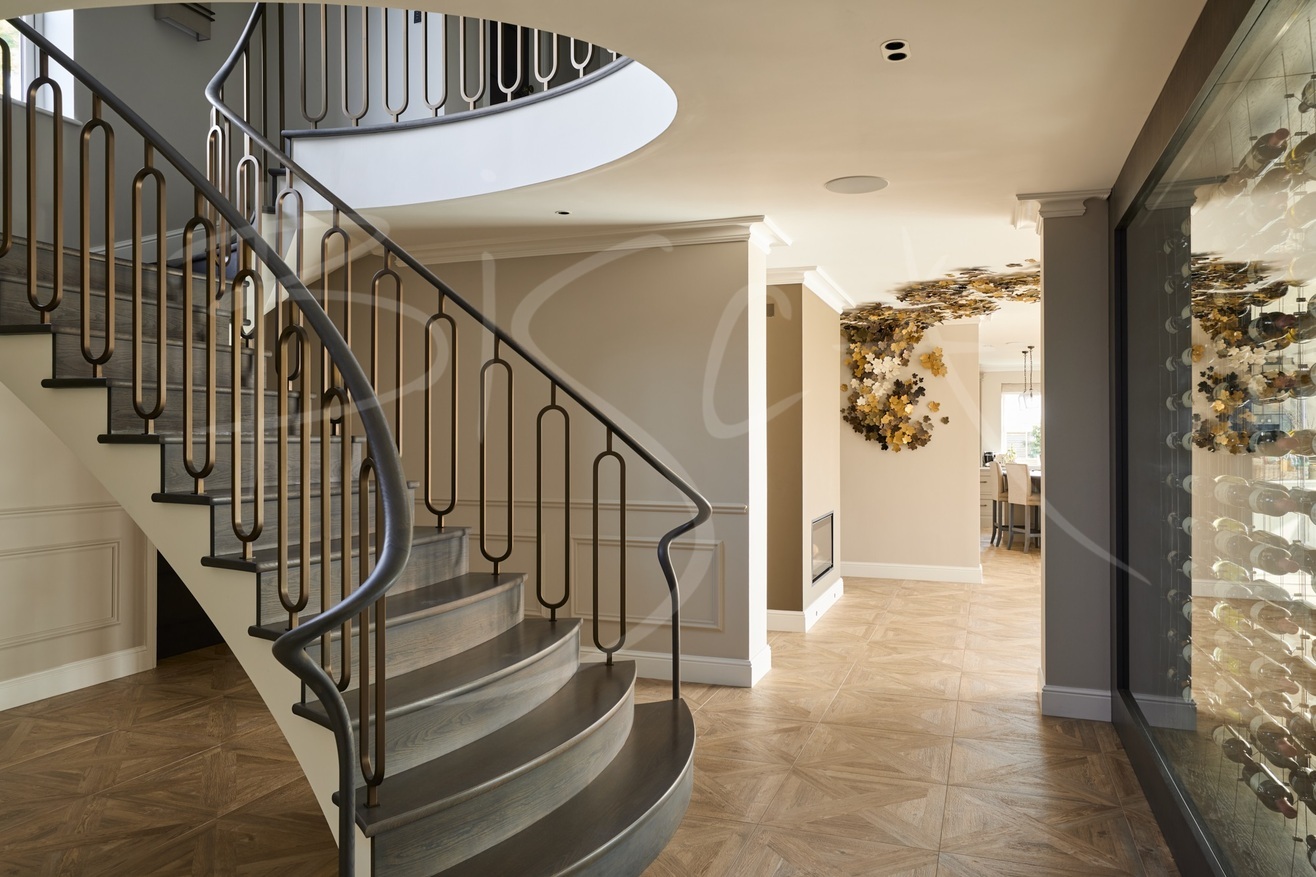
As part of an old farmhouse renovation near Harrogate where numerous piecemeal extensions had previously taken place, Bisca was commissioned to design a central floating staircase, having been introduced early into the project by Anna Crecraft Interiors.
When the new owners began a complete restoration, the property’s layout had been left fragmented; its architectural identity diluted – and so their ambition was clear – to reinstate coherence, light and elegance to the home. Through close collaboration with Chris Williams at Studio4 Architecture – what followed was a genuine three-way design partnership where architect, interior designer and staircase specialist united, around a shared vision.
The first meeting, gathered around the clients’ kitchen table, set the tone. This was never about simply replacing a staircase, but more about defining the heart of the home. The existing stair blocked light from a feature window and constrained the spatial flow. Early proposals to conceal a WC beneath the structure risked compromising the sculptural potential of the space, and so Bisca encouraged a design-led discussion for the outset.
A Floating Sculptural Centrepiece
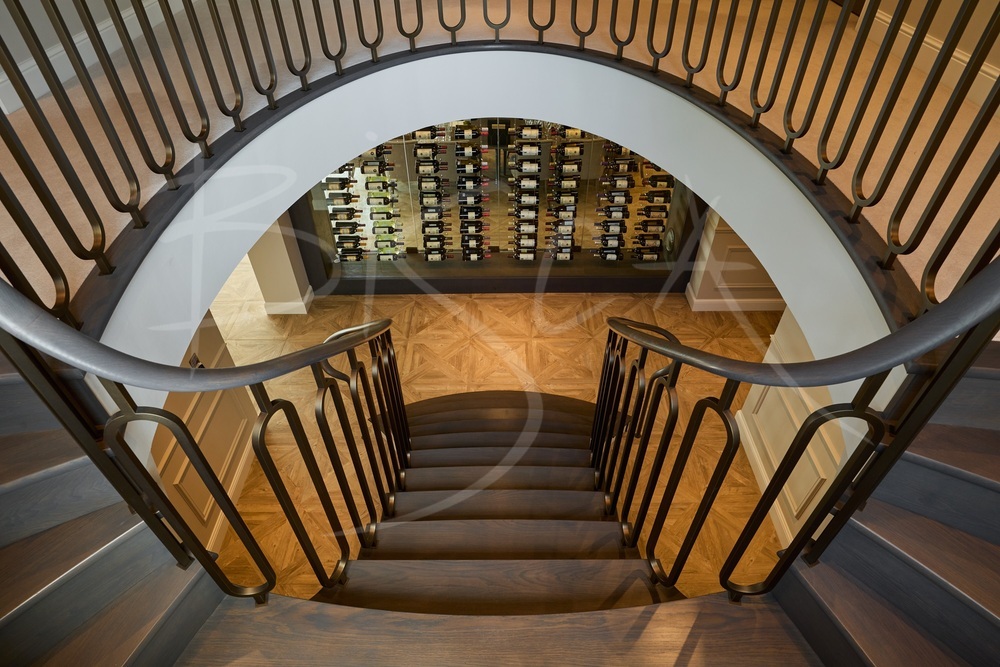
The brief was to create a T-shaped feature staircase rising from the entrance hall and dividing at a galleried landing. The staircase would be central to the home, defining arrival, while adding elegant curves and bringing a classic yet contemporary presence.
Geometry and comfort required refinement; where going was adjusted for improved ergonomics; landing proportions were recalibrated; and the junction between treads, nosing and runner was precisely engineered. A full 3D staircase survey ensured absolute accuracy before development progressed.
By engaging Bisca at concept stage, we guided the plan, relocating utilities into a rear extension and freeing the staircase to become architectural rather than incidental. This is the point where the value of early input from a staircase specialist becomes transformative, rather than purely decorative.
Shaping Light and Movement
Bisca’s solution was a beautiful floating staircase design rising from the hall, before dividing gracefully at a central landing and maintaining circulation exactly as envisioned. Formed from profiled and rolled mild steel, the structure is painted to create a refined architectural presence. As the staircase descends, the treads widen into feature bull-nosed forms, each subtly unique, responding to its position within the space.
The landing edge curves outward, echoing convex treads below. As the stair rises, this curve gradually softens, creating a gentle geometric illusion – a rhythm of movement that feels almost musical. Beneath, a subtle parabolic underside, reminiscent of a flying buttress – enhances visual lightness. Connected to the building at only the head and foot, the staircase appears to float effortlessly, demonstrating how structural engineering and artistry combine in a truly resolved staircase design.
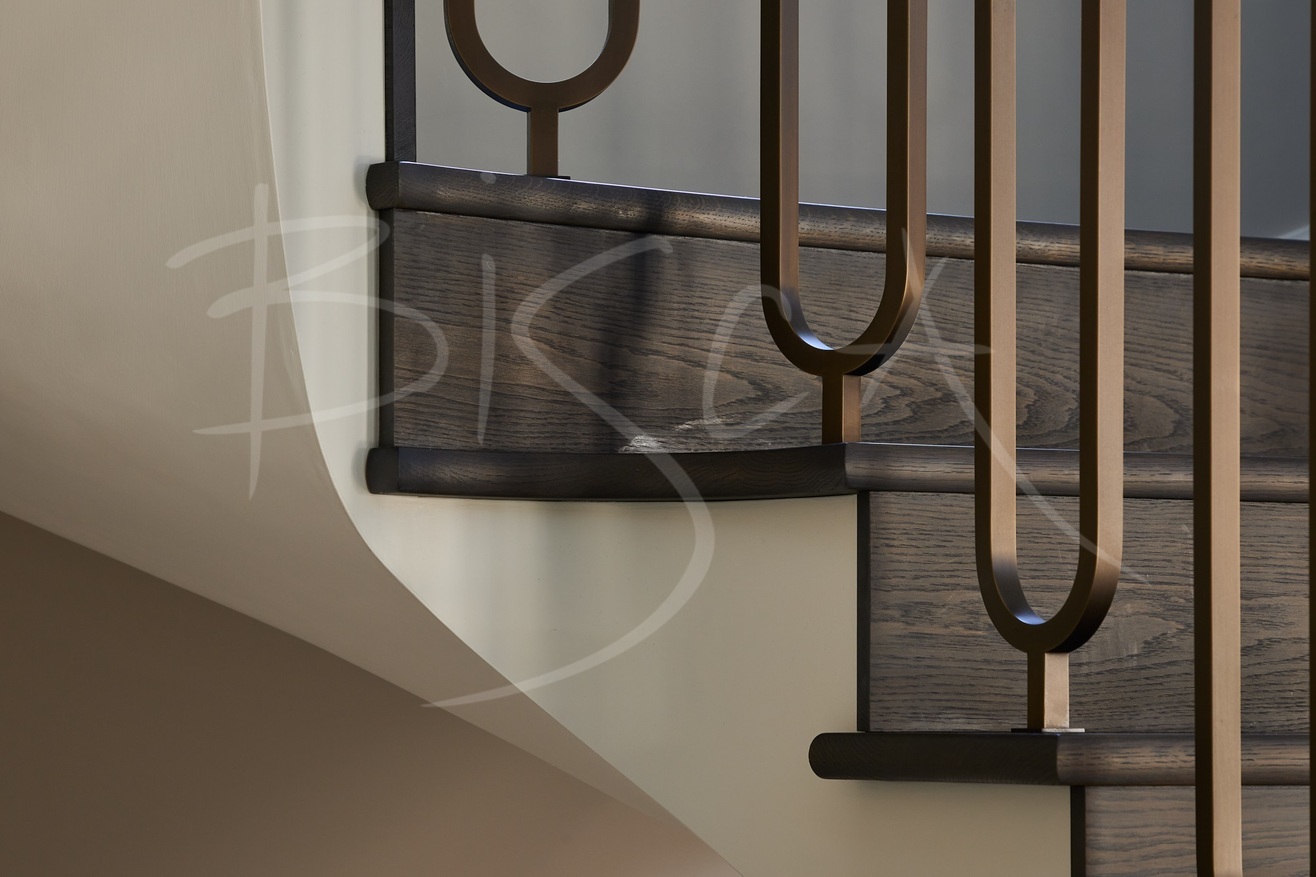
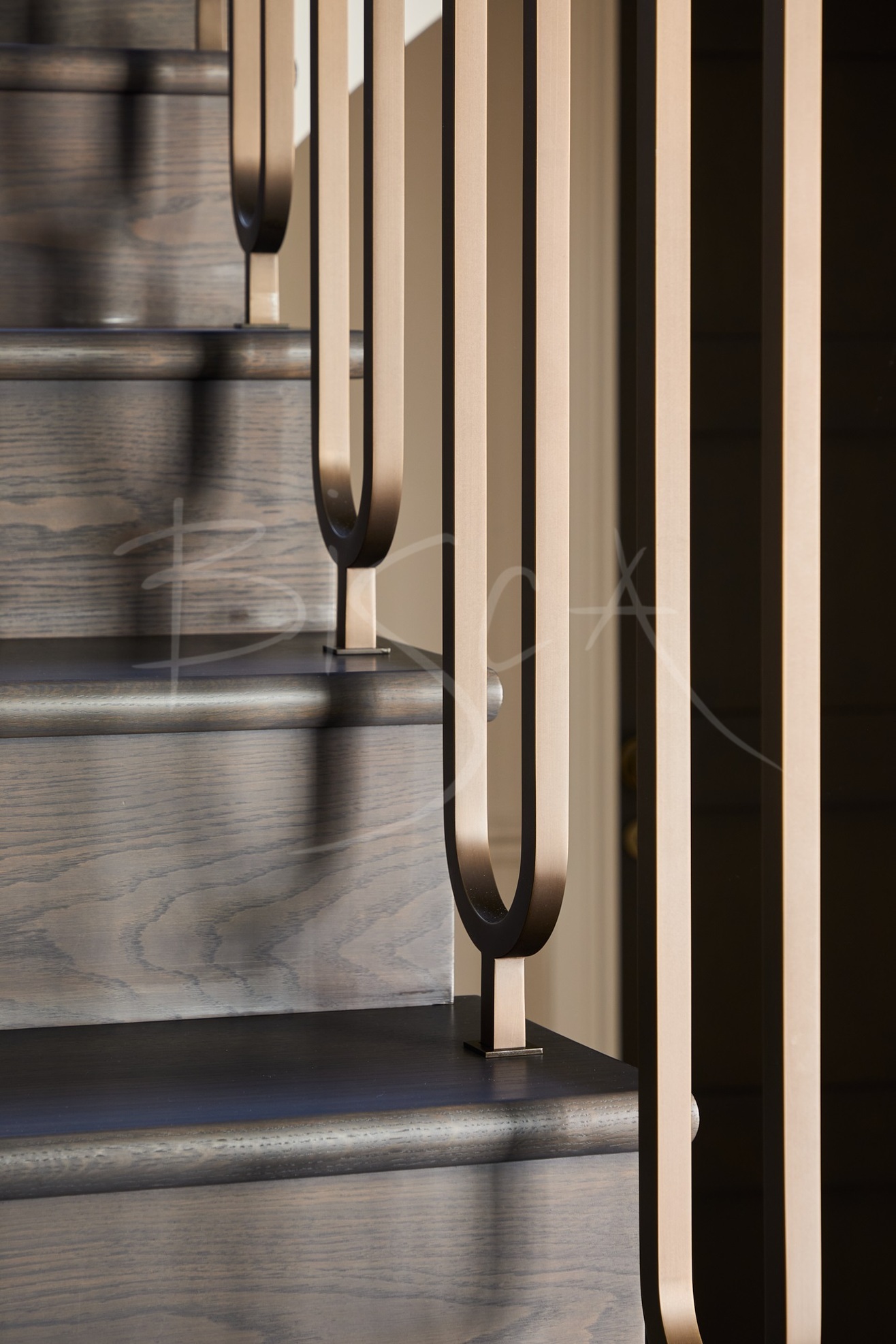
Organic feature newels support sweeping handrails that flow continuously around the gallery. Dark smoked oak unifies handrail, treads and landing nosings, grounding the staircase within the farmhouse aesthetic, while maintaining contemporary clarity. Hand-formed brass uprights reference Art Deco styling through their elegant oval profile. Slotted directly into the oak staircase without visible bezels, they deliver purity of line and craftsmanship-led detailing.
Crafting through Collaboration
Once approved, the detailed designs were balanced with engineering precision. Every tread profile was individually developed; no angle repeated without intent. Landing nosings were routed to accommodate the carpet runner, flush to the surface. The relationship between tread overhang, riser detail and runner thickness was studied meticulously, while brass uprights were aged to achieve tonal harmony with the interior lighting fixtures.
Bisca worked closely with the construction team, advising on structural interfaces and load considerations early in the renovation. This proactive involvement ensured staircase installation progressed seamlessly, while protecting the architectural integrity of the project.
This farmhouse renovation project demonstrates what happens when a staircase specialist is engaged at the right moment. Because Bisca contributed before layouts were fixed, the staircase shaped the architecture – rather than being confined by it. Light was liberated. Circulation was rebalanced. And proportions were refined around a sculptural centrepiece.
The result extends beyond a new oak staircase – creating an architectural gesture which connects both floors, disciplines and design ambition. The value of this three-way collaboration transformed a once fragmented farmhouse into a home of presence, poise and enduring beauty.
Partners for this Project
Architects: Studio4 Architecture
Interior Designers: Anna Crecraft Interiors
Project ID: 8146