

Staircase Ideas – How to Redefine Your Hallway with a Feature Stair
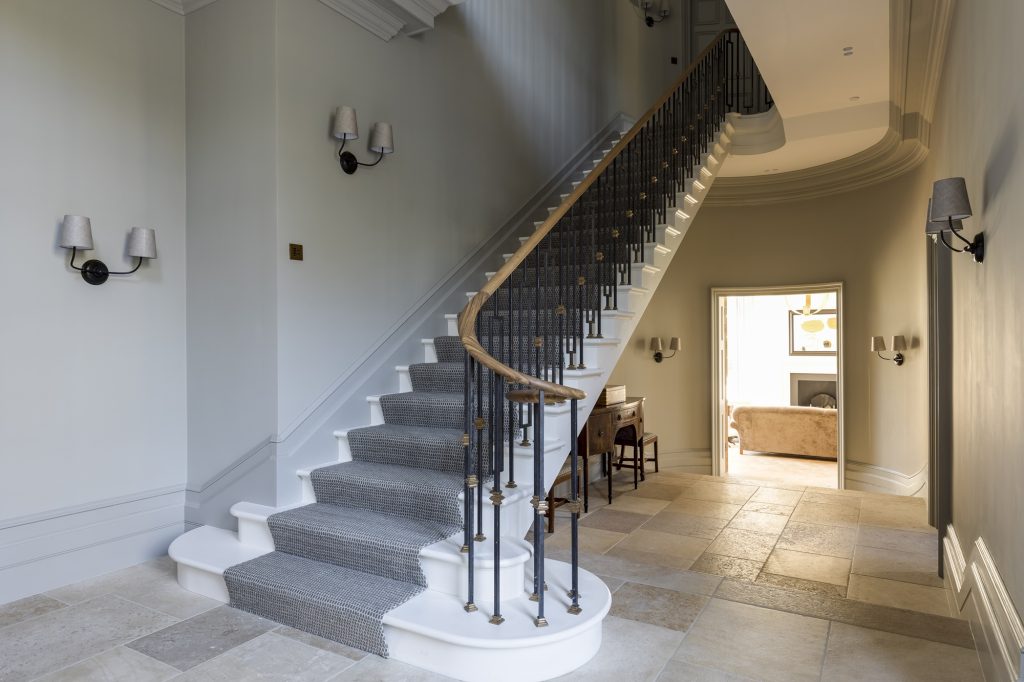
Rethinking the Heart of Your Home
A feature staircase has the unique ability to bring cohesion to not just the hallway, but the entire home’s interior. Through form, material and detailing, a bespoke staircase will echo design themes used throughout your property, connecting spaces both visually and emotionally.
For too long, the hallway has been treated as a purely functional space – a walk-through, even a means to an end. Yet in reality, it is the only area in most homes that connects every level and almost every room. It is most often the first space you experience when you arrive home and the last you pass through when you leave or go to bed.
When thoughtfully designed, a hallway becomes far more than a transition – it transforms into a reception space – a moment of pause, a room in its own right. With the staircase at its heart, this structure has the potential to become a striking architectural feature which will create a memorable identity for the property.
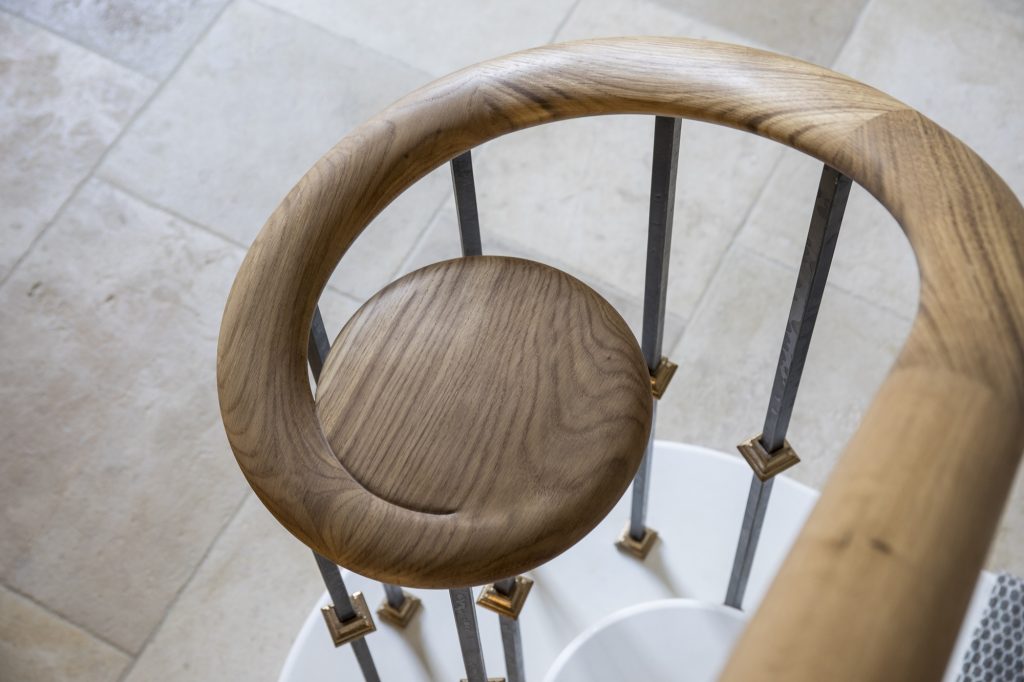
Turning First Impressions into Lasting Moments
A hallway staircase presents an opportunity for materials to intersect and craftmanship to be experienced up close – drawing together surrounding features including doors, handrails, balustrades, flooring, and treads. Each bespoke finish becomes a tactile touchpoint, creating the perfect setting for sensitive design decisions.
When features such as bespoke doors, aged timber, stone flooring or statement ironmongery are present, a specialist staircase designer can enhance these elements rather than compete with them – matching profiles, finishes and textures to create a seamless entity. Whether designing from scratch or reworking an existing home, the layout of the hallway deserves careful consideration. You will first want to understand how rooms connect with each other; how the space is viewed from above or below; and where both movement and light flow most naturally.
Space, Layout and First Impressions
It is common for staircases to face directly towards the main entrance, which can feel imposing. The staircase can however be repositioned to feel intuitive and inviting from inside. As part of this full property restoration (right), the direction of the staircase was reversed so that its foot now faces towards the kitchen and living areas – the spaces most frequently used when travelling upstairs.
A straight staircase maximises openness, allowing uninterrupted views through the hallway and beyond. Comfort was central to the design, with a generous rise and going, while materials were carefully coordinated. Bisca worked closely with kitchen manufacturer Humphrey Munson to match the oval-profile handrail and feature volute to the timber used in the kitchen – visually linking the two spaces and reinforcing the hallway’s role as a central connection point. View Project 7294 – Georgian Staircase, Surrey
Integrating Storage Without Compromising Design
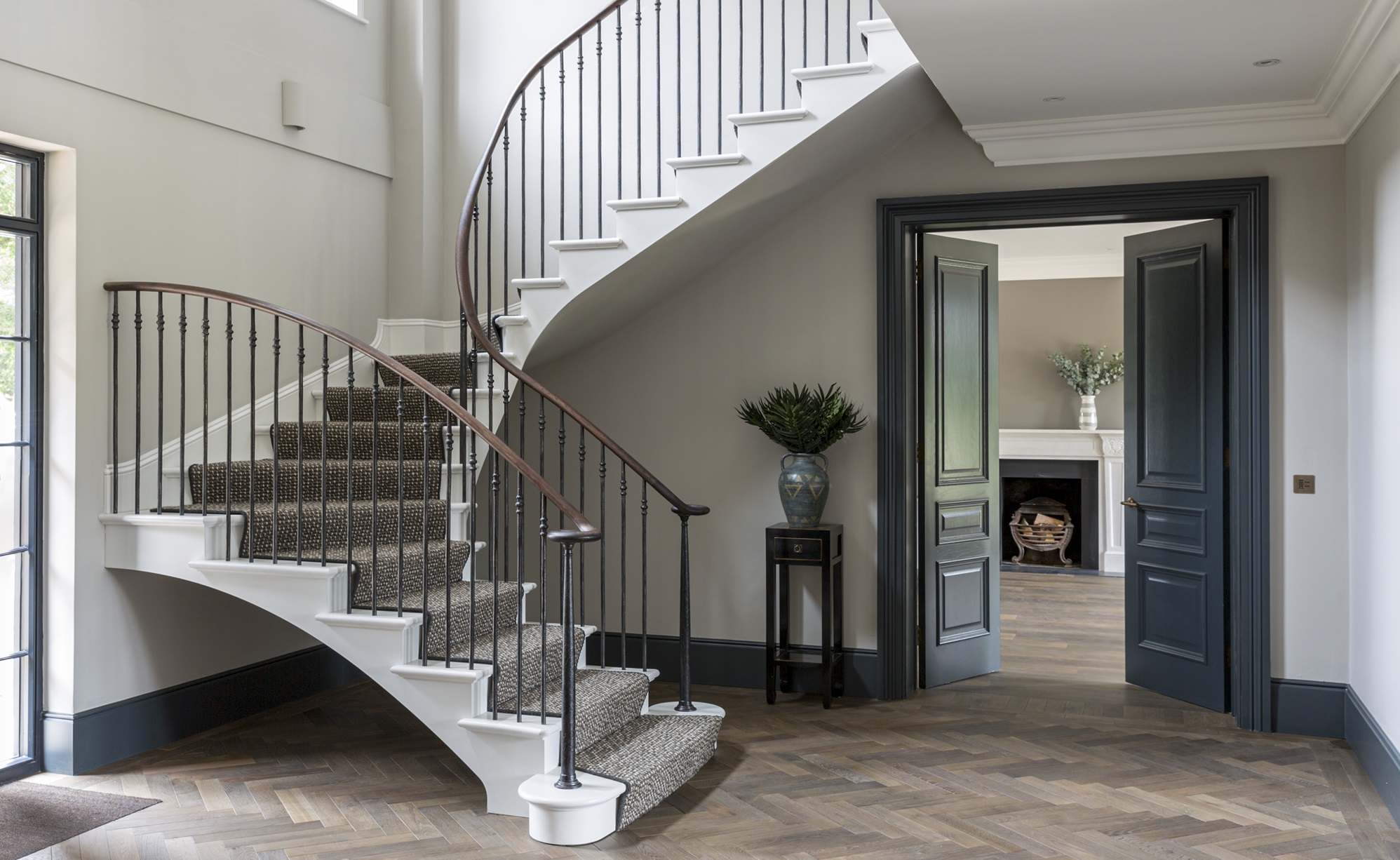
Practicality is essential in a hallway, but storage need not detract from the design. Under-stair spaces offer valuable opportunities for bespoke solutions – from concealed cupboards to cloakrooms and utility areas – all integrated seamlessly within the staircase structure.
Thoughtful detailing, such as stepping storage footprints back slightly from the edge of the stair, can improve circulation and enhance the sense of openness. This replacement staircase (left) was designed to make an existing hallway feel more welcoming, while opening up views to the garden beyond.
Flared treads turn the approach away from the wall, inviting movement upwards, while curved landing edges soften the transition at first floor. The staircase becomes both a visual centrepiece and a practical solution, redefining how the hallway is experienced. View Project 7626, Feature Bronze Balustrade, York
Designing a Hallway to Feel Like a Room
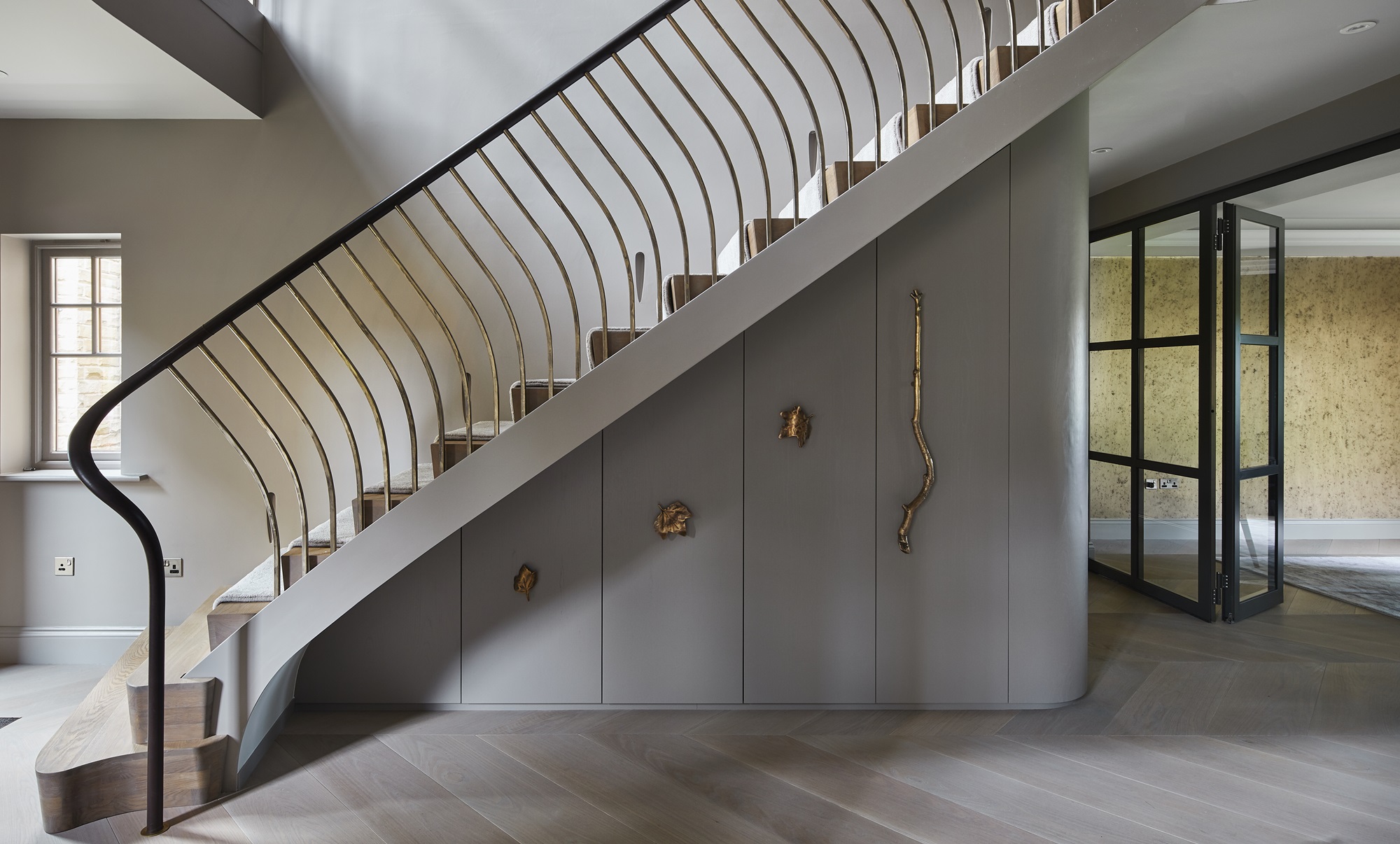
When designed with intention, the hallway becomes a space to enjoy. Furniture, flooring, lighting, doors and storage all play a role; but the staircase is the unifying element that brings these features together.
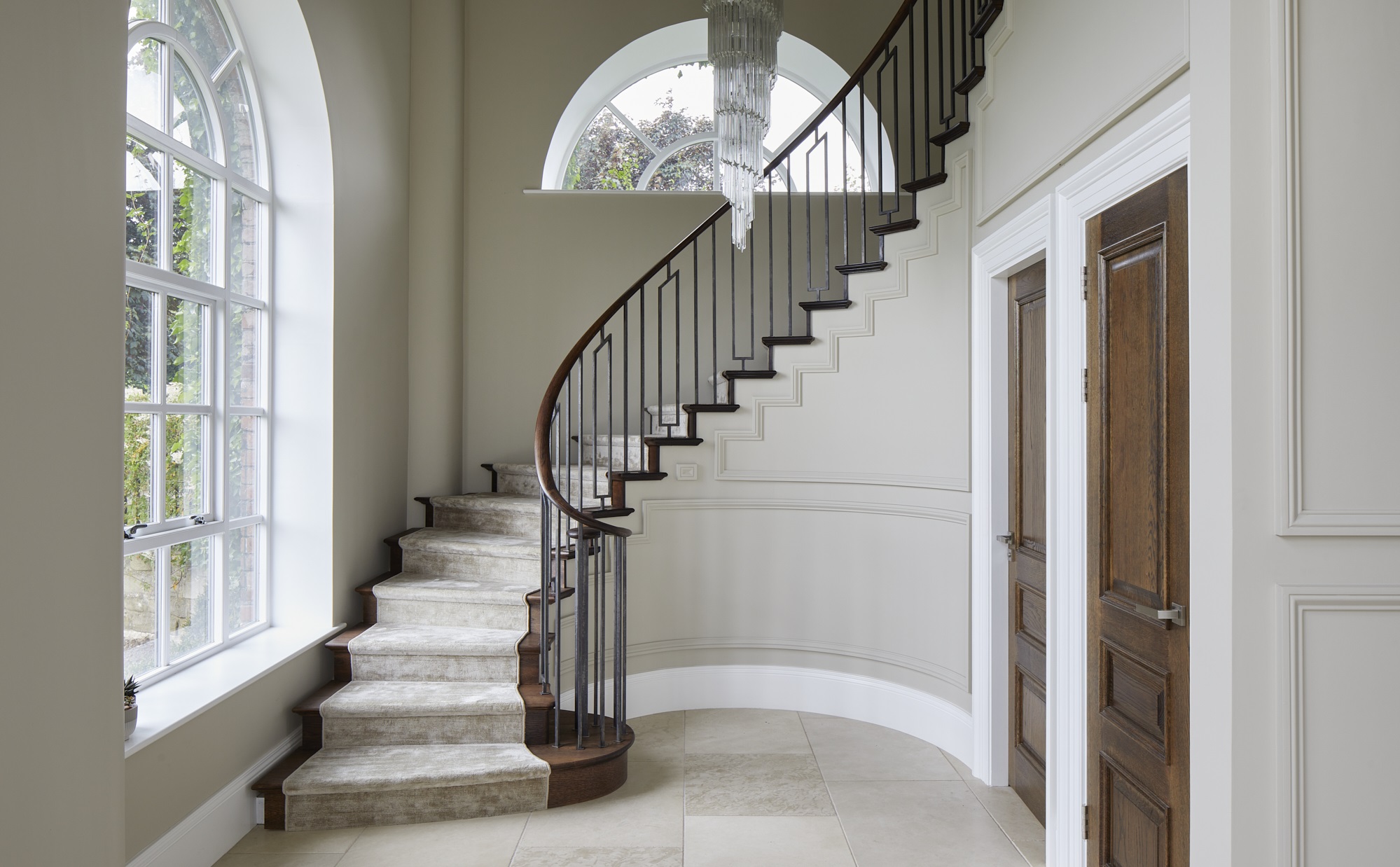
In this period home (right), the staircase was designed as a dramatic statement, while remaining sympathetic to the building’s character. Dark oak treads were paired with limestone flooring and matching oak doors beneath the stair, concealing storage and a cloakroom.
The unusually tall floor-to-floor height allowed for a sweeping curved galleried landing, creating a sense of theatre within the hallway. Here, the staircase doesn’t simply occupy the space – it defines it. View Project 7892 – Classical Curved Oak Staircase, West Yorkshire
Using Light to Create Atmosphere
Lighting is one of the most sensitive yet impactful tools for transforming a hallway. It enhances architectural features, adds warmth and creates atmosphere, particularly in spaces with limited natural daylight.
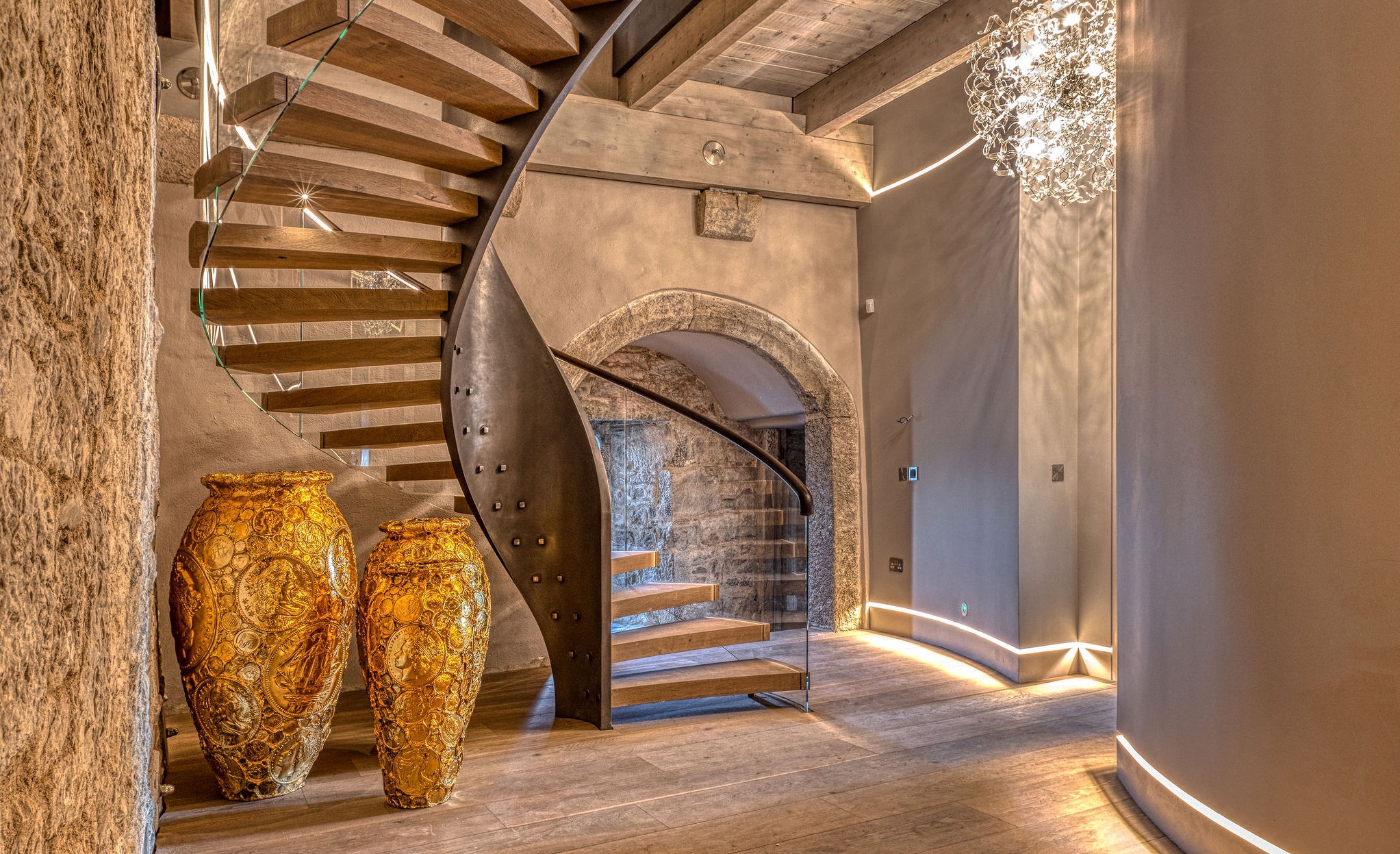
This dramatic staircase (left) connects levels within a medieval tower, where original windows were designed for defence rather than daylight. A raw steel spine references the castle’s heritage, while a glass balustrade maximises available light.
To enhance ambiance, concealed LED lighting was integrated into the leather-clad handrail, stair treads and skirting boards. The result is a sculptural staircase that feels both historic and contemporary, bringing intimacy to a restricted space. View Project 6574, Belvelly Castle, Cork
Getting Started with Your Hallway Feature Staircase
Whether you’re renovating an existing property or designing a new home, enhancing your hallway starts with understanding how you want it to feel as you move through or enjoy the space. As staircase specialists, at Bisca we develop bespoke designs which do not only connect floors, but instead connect spaces, materials and create experiences for all that enjoy them. From early concept design to detailed craftsmanship, we work closely with homeowners, architects and interior designers to ensure every staircase responds perfectly to its individual setting.
For other design ideas for hallways, read Urban Front’s blog on how interior features and bespoke doors can have an impact: Design Ideas for Hallways